RU
RU  EN
EN  FR
FR  DE
DE  ES
ES  PT
PT  AR
AR Common Installation Mistakes That Reduce Electromagnetic Flow Meter Performance
Electromagnetic flow meters are widely used in industries such as water treatment, chemical processing, food and beverage production, mining, and wastewater management. Their ability to measure conductive liquids with high accuracy and no moving parts makes them a preferred choice for many flow measurement applications. However, even the most advanced electromagnetic flow meter can deliver poor performance if it is installed incorrectly. Installation mistakes often lead to unstable readings, reduced accuracy, increased maintenance, and unnecessary operational costs. One of the most common installation mistakes is failing to ensure that the pipeline remains completely full of liquid. Electromagnetic flow meters are designed to measure the velocity of conductive fluids flowing through a full pipe. If the pipe is only partially filled, air pockets can form around the electrodes, causing inaccurate measurements or signal loss. To avoid this problem, flow meters should be installed in locations where the pipe remains full during operation, such as in vertical pipelines with upward flow.
Another frequent mistake is placing the flow meter too close to pumps, valves, elbows, or other flow-disturbing equipment. These components create turbulence and uneven flow profiles that can affect measurement accuracy. Electromagnetic flow meters perform best when installed with sufficient straight pipe lengths before and after the meter. This allows the fluid flow to stabilize and ensures more accurate readings. Improper grounding is another major cause of performance issues. Electromagnetic flow meters operate by measuring electrical signals generated by conductive liquids moving through a magnetic field. Poor grounding can introduce electrical noise and interfere with signal quality. Proper grounding rings, grounding electrodes, or grounding cables should be installed according to manufacturer recommendations to ensure stable and accurate operation.
Installing the flow meter in locations with excessive vibration can also reduce performance. Vibrations from pumps, motors, compressors, or nearby machinery may affect sensor stability and electrical connections. Over time, vibration can loosen components and create fluctuating readings. Where vibration cannot be avoided, additional mechanical supports or vibration isolation measures should be used. Air bubbles present another challenge for electromagnetic flow measurement. When significant amounts of air enter the liquid stream, measurement accuracy may decrease because the meter detects both liquid and gas. This is especially common near pump suction lines or poorly designed piping systems. Proper installation locations should minimize the possibility of trapped air or gas entering the measurement section.
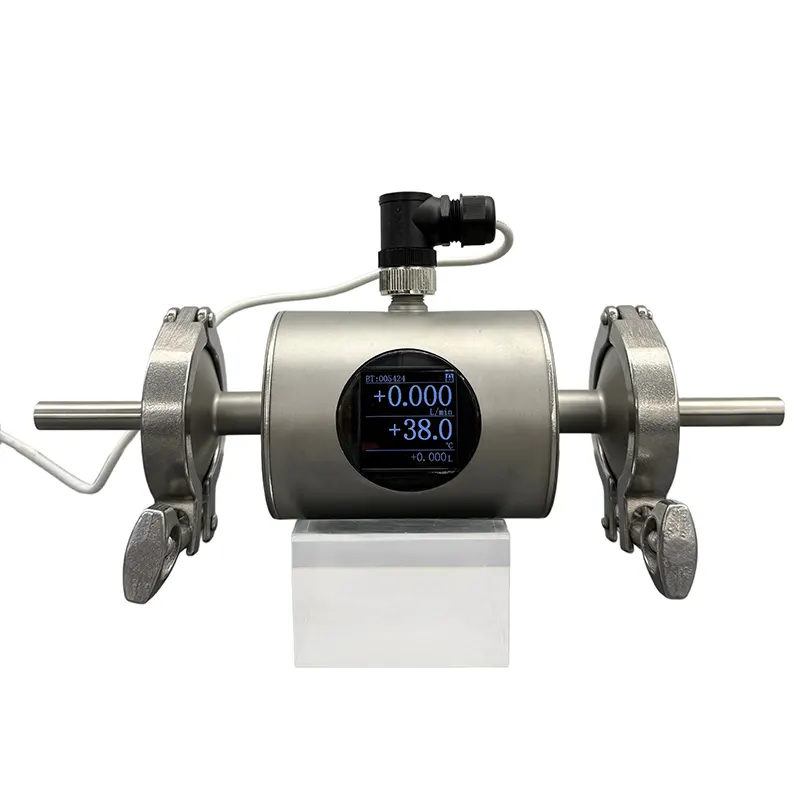
Incorrect flow direction installation is another preventable mistake. Most electromagnetic flow meters are designed with a specified flow direction indicated by an arrow on the meter body. Installing the meter in the wrong direction can cause inaccurate readings and operational problems. Verifying flow direction before installation helps avoid unnecessary troubleshooting later. Many users overlook the impact of electrode positioning. In horizontal pipelines, the electrodes should ideally be positioned horizontally rather than vertically. This helps prevent air accumulation at the top of the pipe and sediment buildup at the bottom from affecting measurement performance. Proper electrode orientation improves long-term measurement stability.
Installing electromagnetic flow meters in areas with strong electromagnetic interference can also create problems. Equipment such as large motors, variable frequency drives, transformers, and high-voltage cables may introduce electrical noise that affects signal transmission. Using shielded cables, proper grounding, and maintaining adequate distance from interference sources can significantly improve measurement reliability. Another common issue is selecting an inappropriate installation location in relation to pipeline elevation. Installing a flow meter at the highest point of a pipeline system increases the likelihood of air accumulation. Similarly, placing it near open discharge points can result in partially filled pipes. Choosing a low point in the system where the pipe remains completely full helps ensure accurate operation.
Poor cable installation practices can also affect performance. Running signal cables alongside power cables may expose the measurement signal to electrical interference. To maintain signal integrity, signal and power cables should be routed separately, and recommended cable shielding practices should be followed. Regular inspection after installation is equally important. Even a properly installed flow meter can experience performance issues if grounding connections loosen, electrodes become coated, or process conditions change over time. Periodic verification helps maintain measurement accuracy and system reliability.